

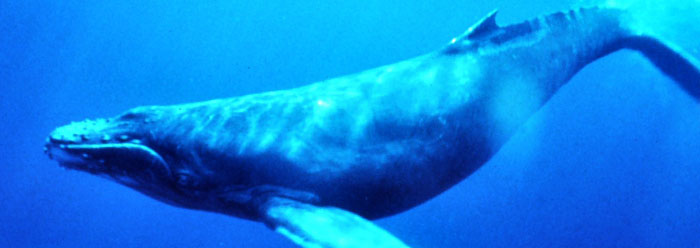
 Rorqual whales, including blue whales and minke whales, don't have teeth. Instead, they eat tiny sea animals by filtering water with comb-like bristles in their giant mouths called "baleen." Working in symphony with an array of rorqual-specific traits, a newly discovered sensory organ builds an even stronger case for their special creation.
A subset of baleen, rorqual whales eat through a process known as "lunge feeding" that requires a long list of fully formed features. One of those unique traits, essential for the whale's feeding, involves the mouth and the jaw—the accordion-like skin folds on the throat greatly expand when they swallow huge mouthfuls of prey-laden water.
No combination of natural processes could have organized rorqual whale features, even considering toothed whales as possible evolutionary precursors. All the necessary traits were required for survival in the beginning, so they must all have popped into existence by a miraculous creation event.
In the journal Nature, American and Canadian scientists described a previously unknown sensory organ situated in the front and center of the whale's lower jawbone, where the bone is split into left and right halves. The organ measures and informs the brain about the resistance force upon the whale's gaping mouth when lunge feeding. The unique organ also detects "dynamic rotation of the jaws during mouth opening and closure," according to the report. In other words, without this sensory organ whales would not know how much force is too much when lunging through water—they could fatally damage themselves without this key sensory and data coordination device.
read more http://www.icr.org/article/6893/
 In The Magic Man in the Sky, Carl Gallups has given us an exciting insight into the many unanswered questions of evolution theory and, based on biblical truths – both prophecies and promises, the possibilities of other worlds and realities denied by evolutionists. With his open and frank approach, supported by extensive research and information from learned professionals in their respective fields, Carl challenges believers and unbelievers to take a serious look at the subjects discussed in this book. Ultimately, Carl invites every reader to seriously consider the gravity and consequences of accepting or rejecting the truth presented. In this hour of all-but-universal darkness, a bright ray of hope and confidence shines forth from the truths of this book. In a time when lives are marked by a growing hunger for spiritual realities, Carl Gallups reveals the truth that real science and Holy Scripture are inseparably linked to verify that behind all creation there is an intelligent designer who created all that exists.
No comments:
Post a Comment